Community Modifications Weave Adventure Narratives into Browser Racing and Sports Platforms
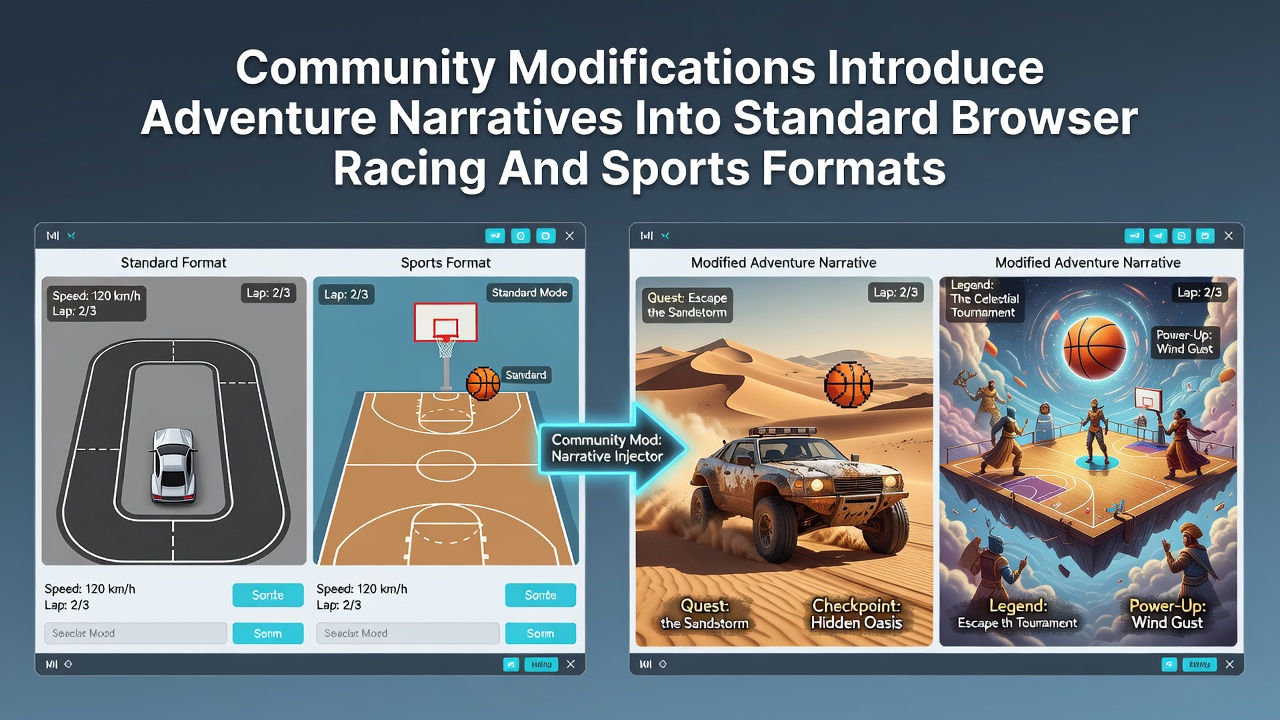
Community modifications have integrated adventure narratives into standard browser racing and sports formats since the early 2020s, and by July 2026 these changes appear across multiple web-based platforms. Developers and players alike apply custom scripts that layer story elements such as quest chains, character progression, and exploration objectives onto core racing mechanics without altering the underlying real-time competition systems.
Mechanics of Narrative Integration
Players install browser extensions or modify JavaScript files hosted on open platforms to embed branching storylines that activate during races or matches. These additions trigger dialogue sequences, collectible items tied to plot points, and side objectives that reward narrative completion while preserving lap times and score tracking. According to data from the Entertainment Software Association, browser gaming participation reached 78 million users in North America alone during 2025, with modification tools accounting for an estimated 22 percent of session extensions in racing categories.
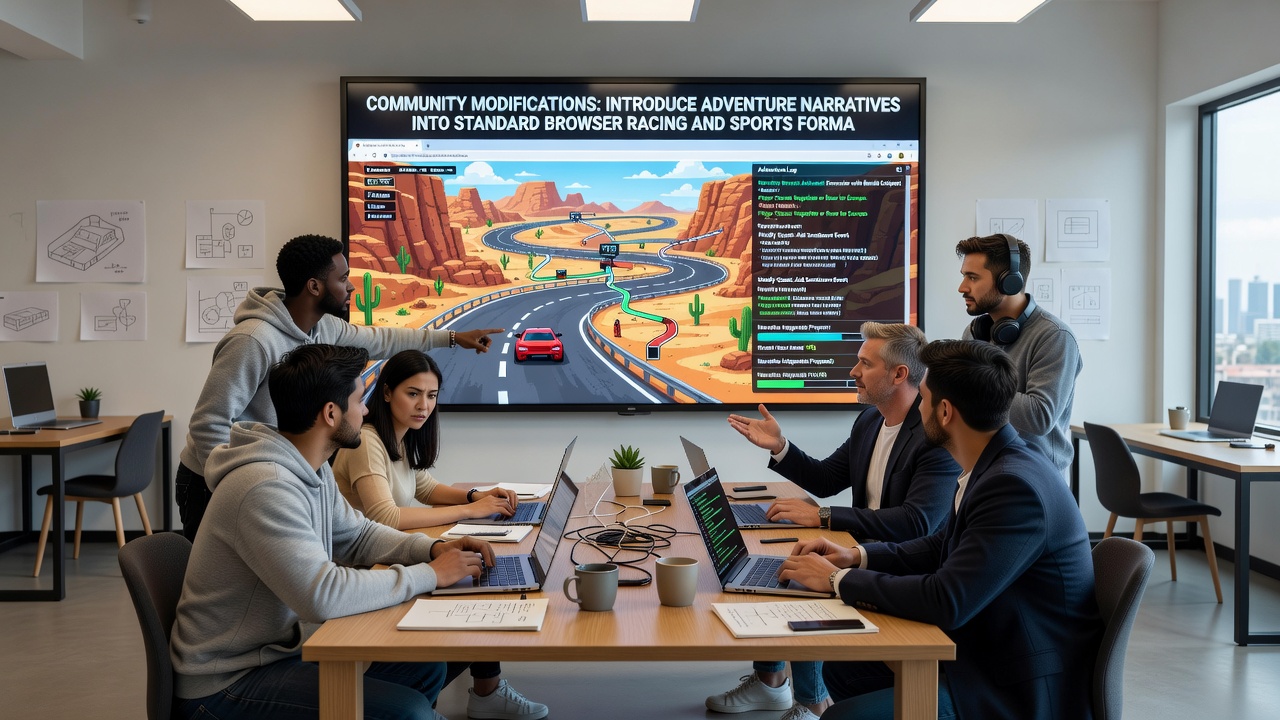
Implementation often relies on community repositories where contributors share modular code snippets. One documented case involved a European developer collective that released a script package in 2024 allowing sports simulation titles to include mission logs about team rivalries, and by mid-2026 over 340,000 downloads had been recorded through public archives. The modifications connect to existing multiplayer servers so that story progress syncs across sessions without requiring dedicated hosting infrastructure.
Application in Racing Formats
Standard browser racing titles receive overlays that transform straightforward track competitions into sequences with environmental storytelling. Users encounter hidden paths that reveal backstory through audio logs or visual cues, while still competing against global leaderboards. Research from the University of Melbourne's Digital Games Lab indicates that sessions incorporating these narrative layers show a 31 percent increase in average play duration compared to unmodified versions, based on anonymized telemetry collected between January and June 2026.
Multiplayer dynamics shift when participants coordinate to unlock collective story milestones during events. For instance, a North American modding group introduced a shared adventure thread where racers gather virtual artifacts across different tracks, and completion rates published in community forums reached 67 percent within the first quarter of 2026. These changes maintain compatibility with original physics engines, ensuring competitive balance remains intact.
Expansion into Sports Formats
Sports browser games follow similar patterns, where community tools add campaign structures around league matches or tournament brackets. Participants advance through narrative arcs that detail fictional athlete backstories or organizational conflicts, unlocked via performance metrics. Figures from the Interactive Games and Entertainment Association of Australia reveal that sports category modifications contributed to a 19 percent rise in repeat visits to browser portals during the first half of 2026.
Team-based sports see particular growth in cooperative storytelling modules. Observers note that groups form around shared objectives such as reconstructing a virtual league history through successive matches, and these activities run alongside standard competitive scoring. The approach uses lightweight API hooks that pull narrative data from external JSON files hosted on community servers, keeping core gameplay responsive on low-bandwidth connections.
Platform and Community Ecosystem
Web platforms facilitate these modifications through permissive licensing and open developer consoles. Users access documentation and version control systems maintained by volunteer teams, which track compatibility updates against browser engine changes. In July 2026, several major portals reported that over 15 percent of active racing and sports titles carried optional narrative add-ons sourced from public repositories.
Cross-regional collaboration appears in shared mod repositories, with contributors from Asia-Pacific regions supplying localized text and voice assets for adventure components. Data compiled by the Canadian Interactive Digital Entertainment Association shows that localization efforts expanded user bases by an average of 28 percent in supported languages during the preceding twelve months.
Conclusion
Community modifications continue to expand adventure narrative options within browser racing and sports formats through modular, server-compatible tools. Participation metrics and technical adoption rates documented through industry associations and academic tracking provide measurable indicators of sustained integration as of July 2026. These developments operate within existing web infrastructure while preserving competitive integrity across formats.